
Bakery Tray Proofers
A tray proofer carries panned dough on traveling trays through a warm, humidity-controlled enclosure for its final rise. The Henry Group builds them in Greenville, Texas, as an integral part of an automated line: they handle pan-size changes, suit short runs of different products as well as long continuous runs, use floor space efficiently, and can be built over existing equipment such as ovens or fully floor mounted.
Proofer Loaders and Unloaders
Proofer Loaders and Unloaders come in a variety of styles. Loaders are available in our standard pusher style configuration or as a lug style loader to accommodate space constraints. We also provide Proofer Elevators and Lowerators for split level applications like unloading on a different floor of a multi-story building.
Enclosure and Structure
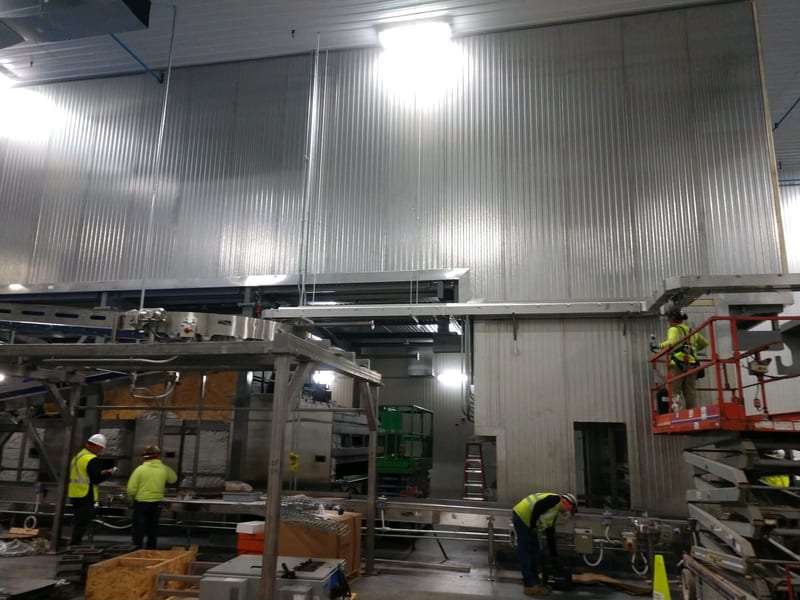
- 4-inch insulated sidewall panels, 22-gauge 304 stainless steel inside and out with a bonded foam core and no through-metal, for thermal efficiency and sanitation
- Vapor-proof LED interior lighting with corrosion-resistant switches
- Stainless steel internal structure
- Stainless steel loader and unloader frames and machinery covers
Trays, Chain and Drive
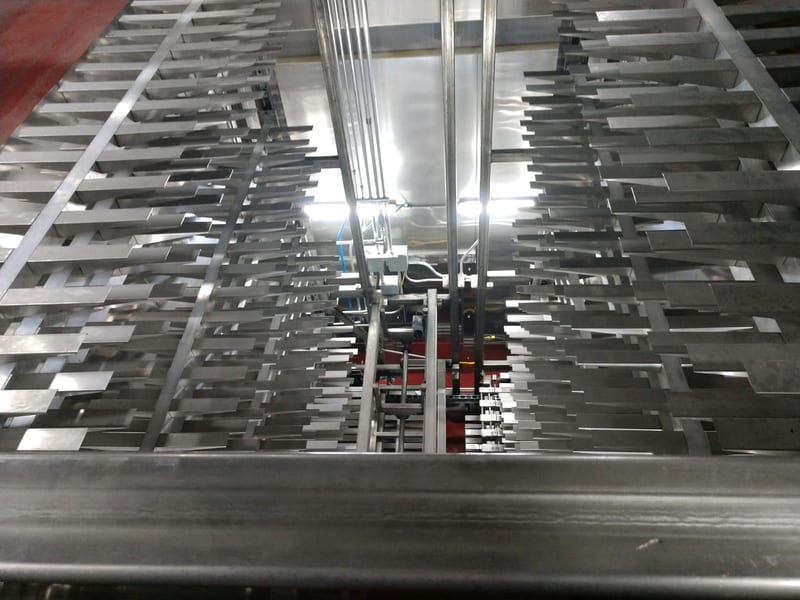
- Double-stacked aluminum trays attached to the main chain with stainless end bosses, so a tray can be removed without taking the chain apart
- Hollow-pin main chains, plated for corrosion resistance
- Cam-follower rollers, turnaround guide arms, hold-down bars and UHMW rollers keep the trays stable through turnarounds and vertical runs
- AC variable-frequency drive for adjustable proofing times, with pneumatic chain tensioning
- Automatic chain oiler with PLC-set lubrication intervals that can be adjusted at the operator interface
Air Distribution
Stainless steel supply and return ductwork runs along both sides for the full length of the proofer, with an adjustable damper at each vertical drop and clean-out ports along the ducts. An automatic exhaust system purges the internal air to reset proofing conditions, and the exhaust can be ducted outside the building.
Safety Devices
- Infeed photo-eye and end-stop switch on the loader to prevent overloading
- Photo-eyes that detect pans overhanging the trays
- Proximity switches that monitor chain take-up tension
- Photo-eyes that detect blockages on the discharge deck and conveyor
- A loader photo-eye that confirms trays are empty before loading
- Access platforms with safety railing, kick plates and ship ladders
Common questions
Can a tray proofer be built over other equipment?
Yes. Tray proofers can be built over the top of existing equipment such as ovens, or fully floor mounted. Proofer elevators and lowerators handle split-level applications, including unloading on a different floor.
How are the trays carried and kept level?
Double-stacked aluminum trays hang on hollow-pin main chains. Cam-follower rollers, turnaround guide arms, hold-down bars and UHMW rollers on the vertical runs keep them stable.
Is chain lubrication automatic?
Yes. An automatic oiler lubricates the main chains at intervals set in the PLC, which can be adjusted at the operator interface.
How is airflow kept even?
Stainless supply and return ducts run along both sides for the full length of the proofer, and each vertical drop has an adjustable damper. An automatic exhaust purges the air to reset conditions.
Can the proofer feed the oven directly?
Yes. A triple-transfer oven loader can move pan groups from the proofer onto the oven hearth, with the spacing between groups synchronized to hearth travel. A servo-driven loader is available for greater precision.
Equipment in production
A THG tray proofer at King’s Hawaiian
See a THG stabilized tray proofer running in production at King’s Hawaiian Bakery.
More bakery equipment videos →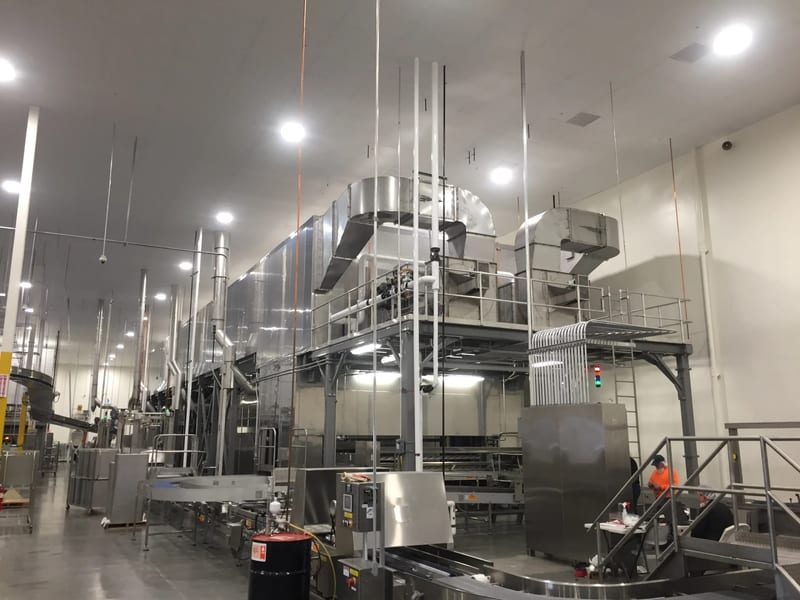
Talk with THG about your equipment.
Share your product, the process and the equipment you need to connect.